
The Beauty in the Space Between
Nothing beautiful gets made alone
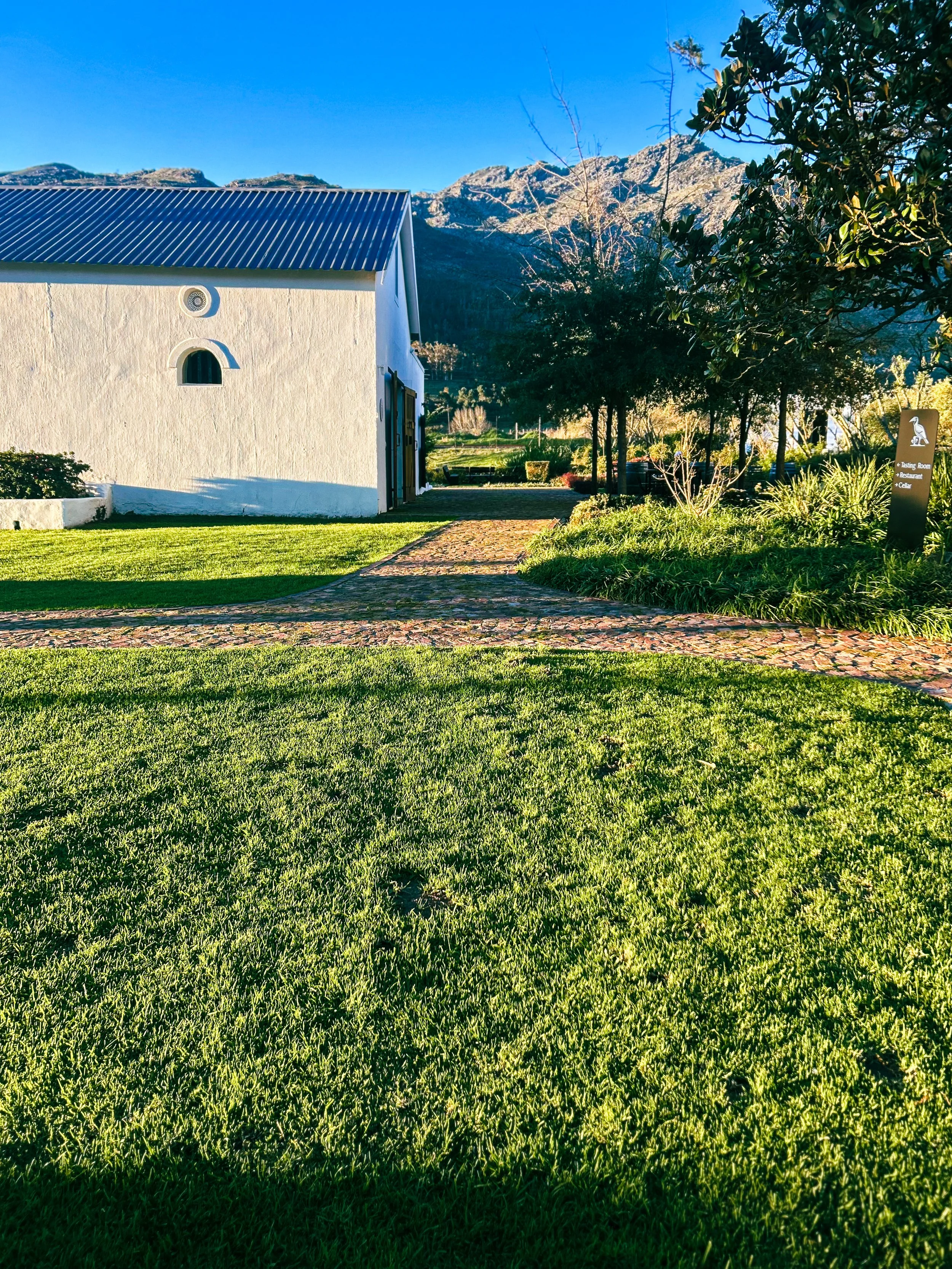
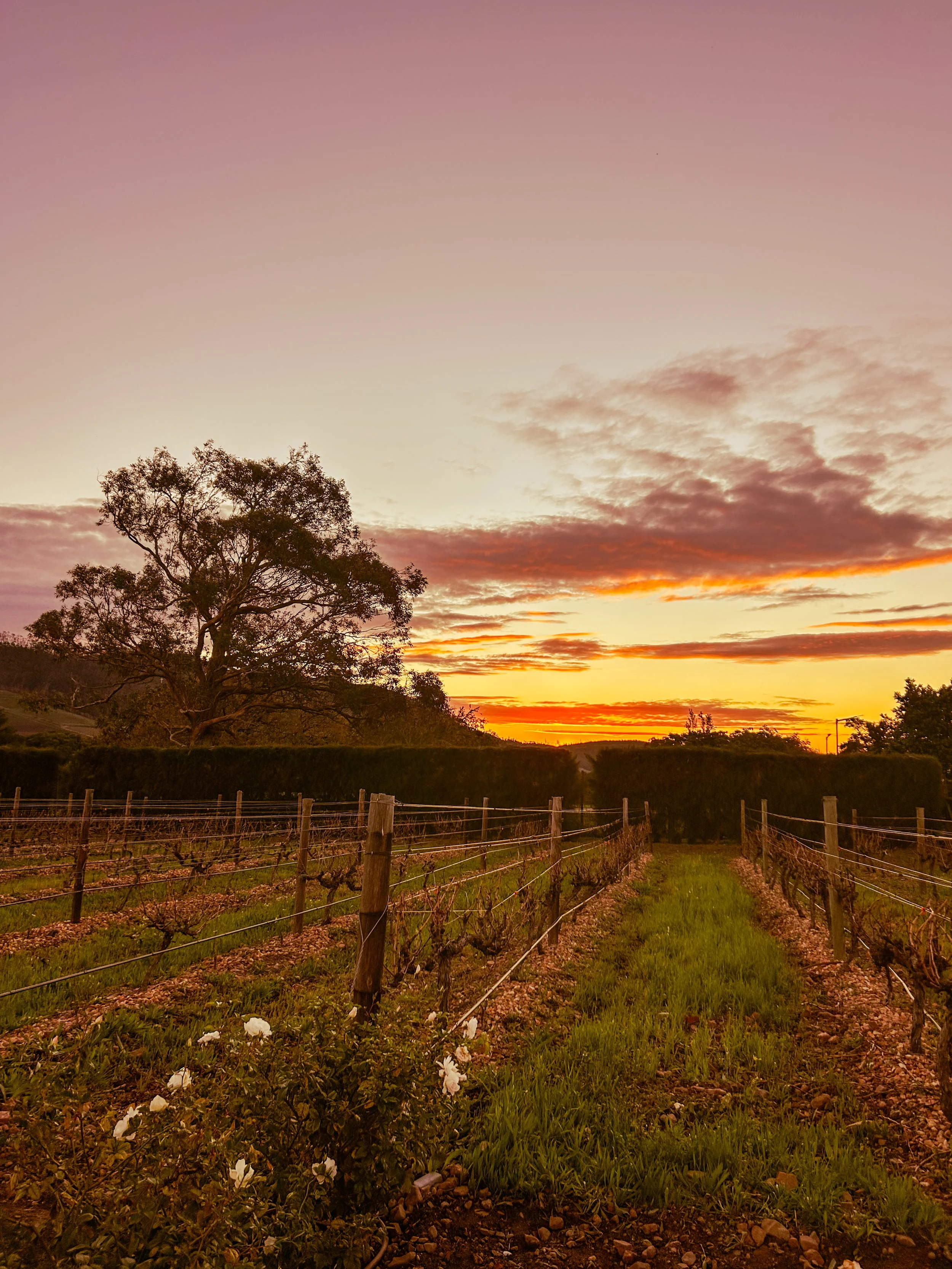
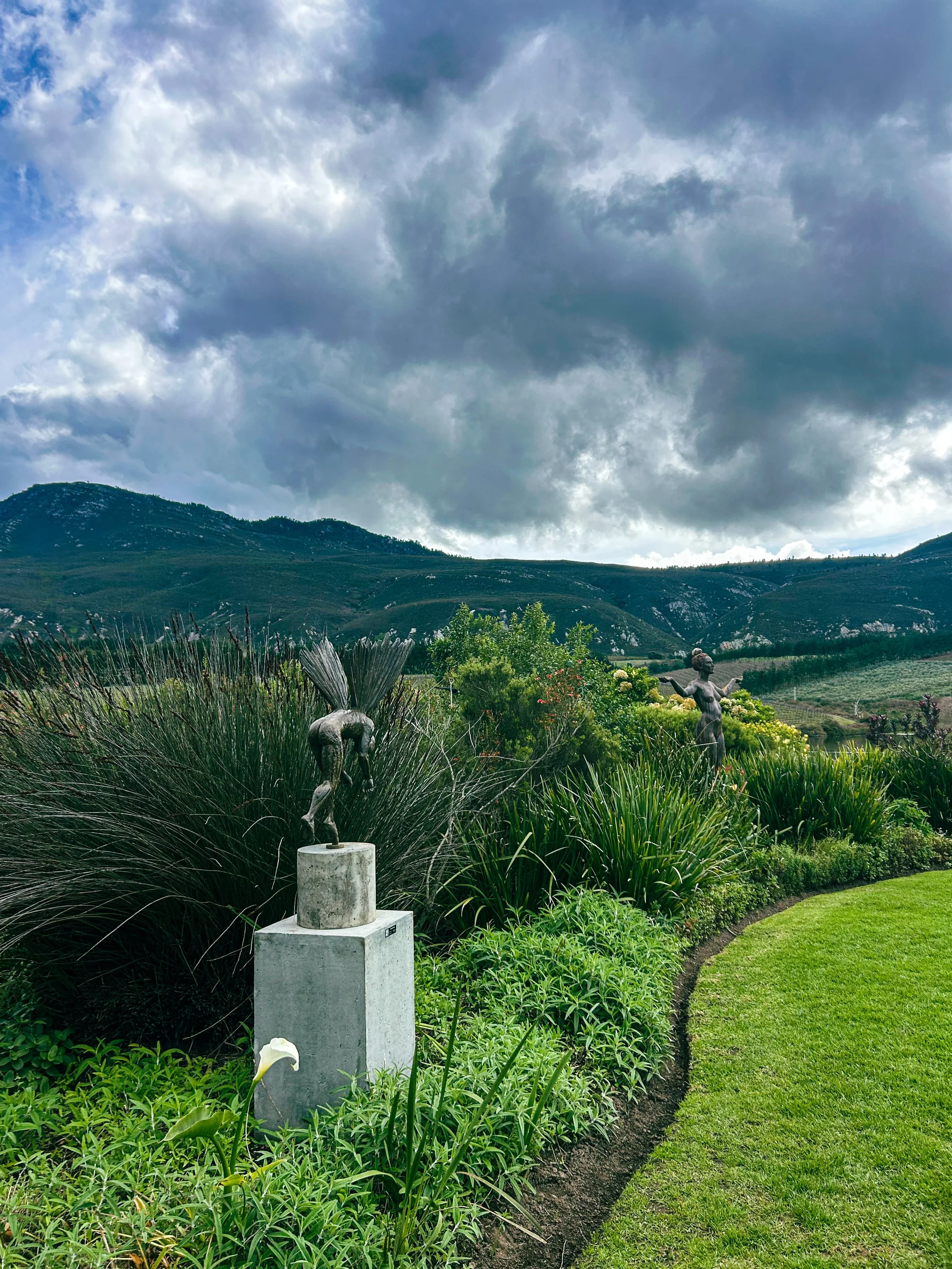
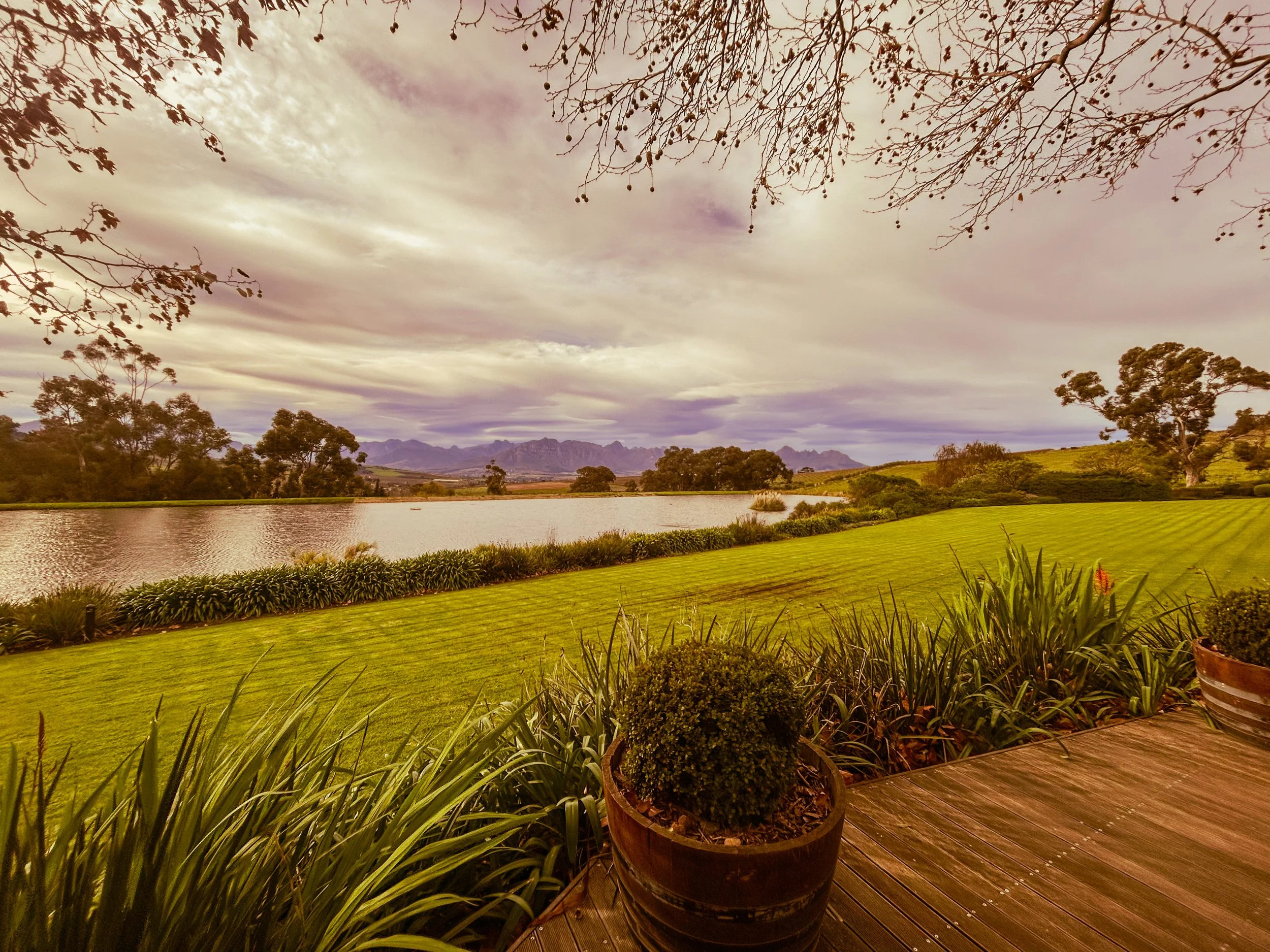
On my last official day of wine tasting in South Africa, I made my way, as if by a stroke of destiny, to the aptly named Hemel-en-Aarde wine region. Hemel-en-Aarde, which means heaven and earth in Afrikaans, occupies a breathtaking, expansive stretch of land just north of the Atlantic Ocean’s coastline.
Hemel-en-Aarde’s proximity to the water and its clay soil make it the perfect cool-climate region from which to grow Chardonnay and Pinot Noir. But the terroir and influence of the sea also set the stage for, if not outright beg for, vintner experimentation and creativity. Thus, the region is known to produce, among other out-of-place varietals, an exceptional Albariño, as well as other Rhône reds and Mediterranean whites. Unconventional is not only harvested and celebrated by the winemakers here, but rewarded and encouraged by the land and the sea.
This part of the world indisputably lives up to its namesake. It is nothing short of majestic. Rolling hills blanketed sometimes by vineyards, other times by vibrant green sheep pastures, and still others by fields of canola and wheat, stretch out into infinitude.
The impressionistic pattern and texture of the hills are interrupted only by distant mountain peaks in the Cape Fold Belt, who themselves play a guiding and protective role in the wine’s yield and legacy. These imposing and divine structures act as ethereal air-traffic-control for the cool Antarctic wind, whose absence or presence influences every sip coming out of this prodigious valley.
The sky in Hemel-en-Aarde is enormous. It has to be, if it is to hold the delta, the space between its larger-than-life heaven and earth headliners. I would even go so far as to say, by merely doing that job alone, it marvelously steals the show.
The overall vibe of the valley compared to the Western Cape’s more well-known wine regions, Franschhoek and Stellenbosch, is more rustic and elemental, but not any less sophisticated or devoted. Sophistication and artistry surface here with natural, rugged if not understated elegance.
Without diminishing any of the wineries I so enjoyed in Franschhoek and Stellenbosch, winemaking in Hemel-en-Aarde, for reasons I can’t quite articulate, felt less like a commercial enterprise and more like an artistic endeavor. Breaking-the-mold is done in complement to and amplification of craft rather than at gratuitous expense of it.
When my research uncovered two wineries that had broken from pretense and tradition and were intentionally underscoring their rebellions using bold, rich storytelling, I knew I had to experience these creative uprisings with my own eyes and tastebuds.
Theirs were stories told, not for the sake of fleshing out a tasting room script, but for transferring purpose and meaning from creator to customer. Their stories and experiences couldn’t help but feel, then, that much more immersive, inclusive and multi-sensorial.
While tasting at these vineyards still came with the prerequisite stunning views, exquisite tasting rooms and revered local gastronomy, tasting also came with an intangible x-factor. A calibrated grace and depth. An evident connection to the land. A felt connection to the sea.
It was this dimension of Hemel-en-Aarde’s lore and culture that not only first attracted me to this part of the Cape to taste but held my attention once there with growing obsession and curiosity. It is also why I suspect that my tastings at Creation and La Vierge have captivated me long after I got home. I loved their wines, yes, but I also loved what ran beneath them.
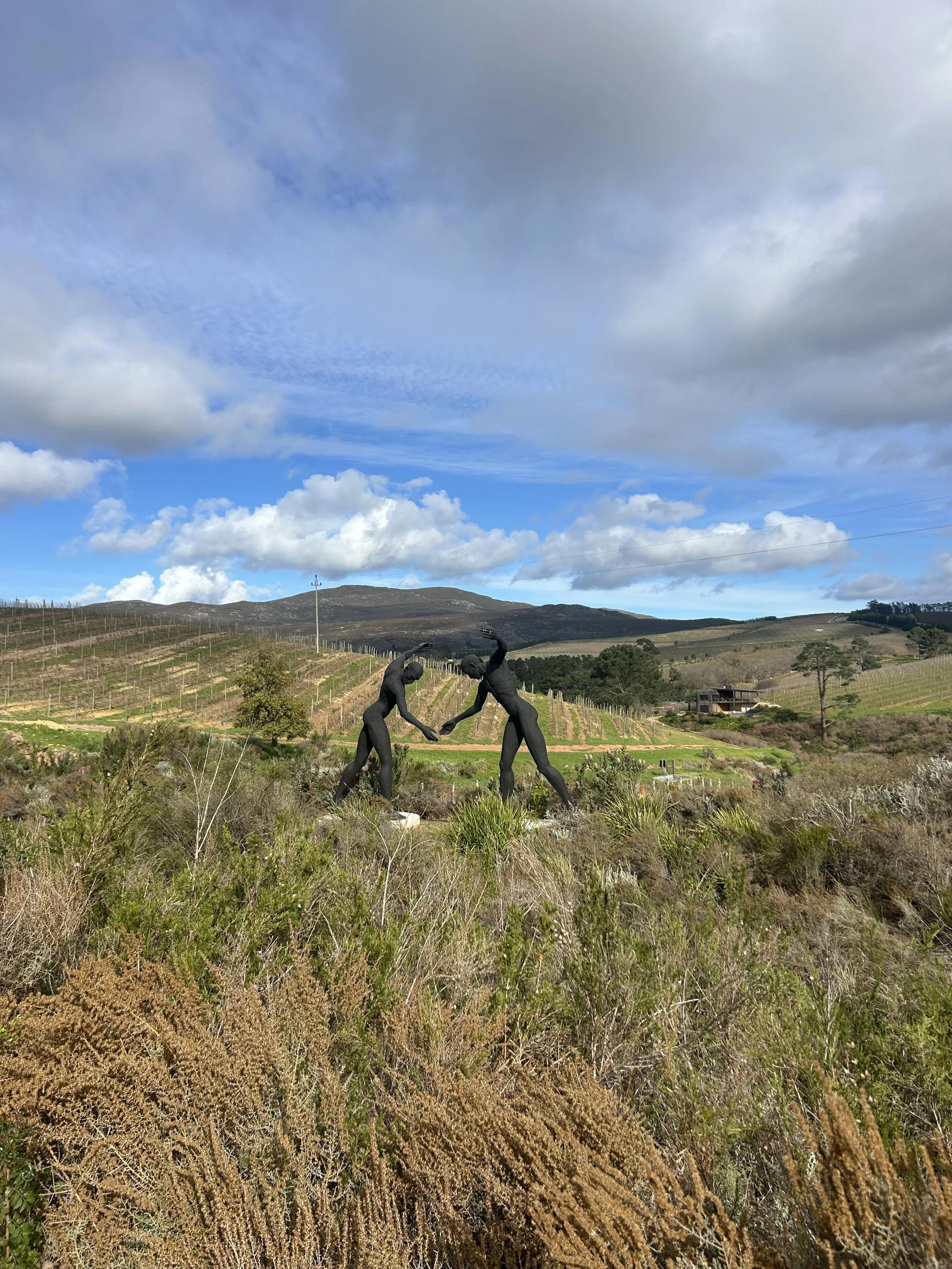
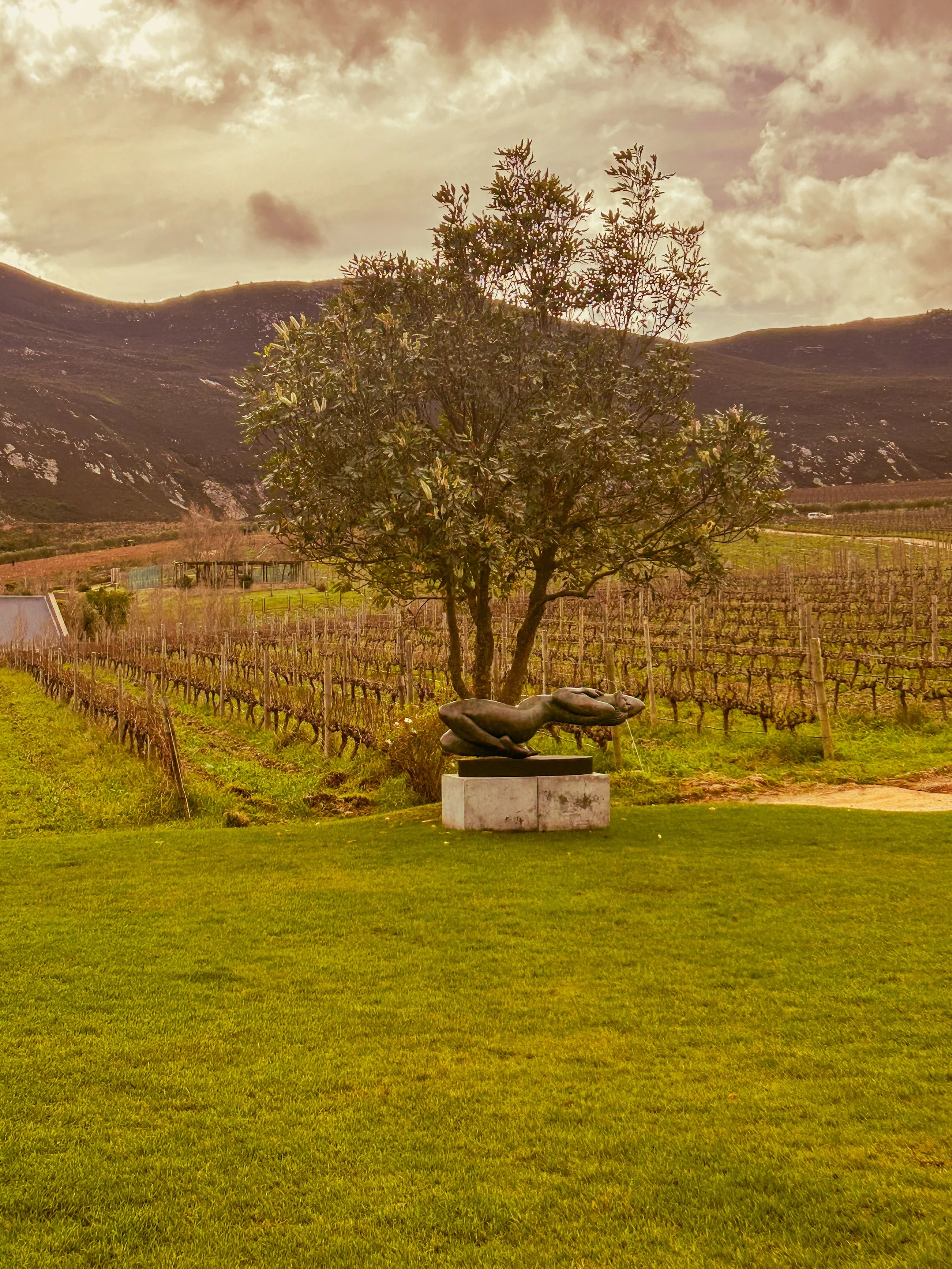
Art on the estate at Creation in Hemel-en-Aarde in South Africa
My hypothesis for this enchantment was that these wineries simply spoke my language. They considered storytelling as much an integral part of the blend as the grapes in the bottle. They understood, too, the relationship was special and irreplaceable. That one cannot wholly exist without the other. By getting that, I felt like these wineries got me.
But I knew there was more to it still. I should have known, for one thing, that wine would be so much more than phenomenal, fermented juice in this complicated corner of the world. It was an access point, a point of connection with the culture, creativity and above all the community that planted and harvested it.
If terroir explains how the land influences what we taste, I was certain there had to be a term for how the human touch shaped the process. I had, after all, witnessed and sipped it across so many regions here and around the world, in countless stories of resilience, determination and individuality. I had also suspected it would explain my own growing fascination with the art of winemaking from ground to glass and why some stories had moved and stayed with me.
What I came to learn I was trying to extract from the process was what the French call Le Facteur Humain (The Human Factor).
My favorite encounter of this kind took place before I actually left Cape Town for wine country. On the eve of trading in the sounds of the city’s bustling Gardens district for the total silence of Franschhoek’s wine village, I partook in a small wine collaboration dinner at Seebamboes.
There, the winemaker, Tremayne Smith of The Blacksmith Wines, took us through a half a dozen or so of the natural wines in his portfolio. Each fantastically more memorable than the last.
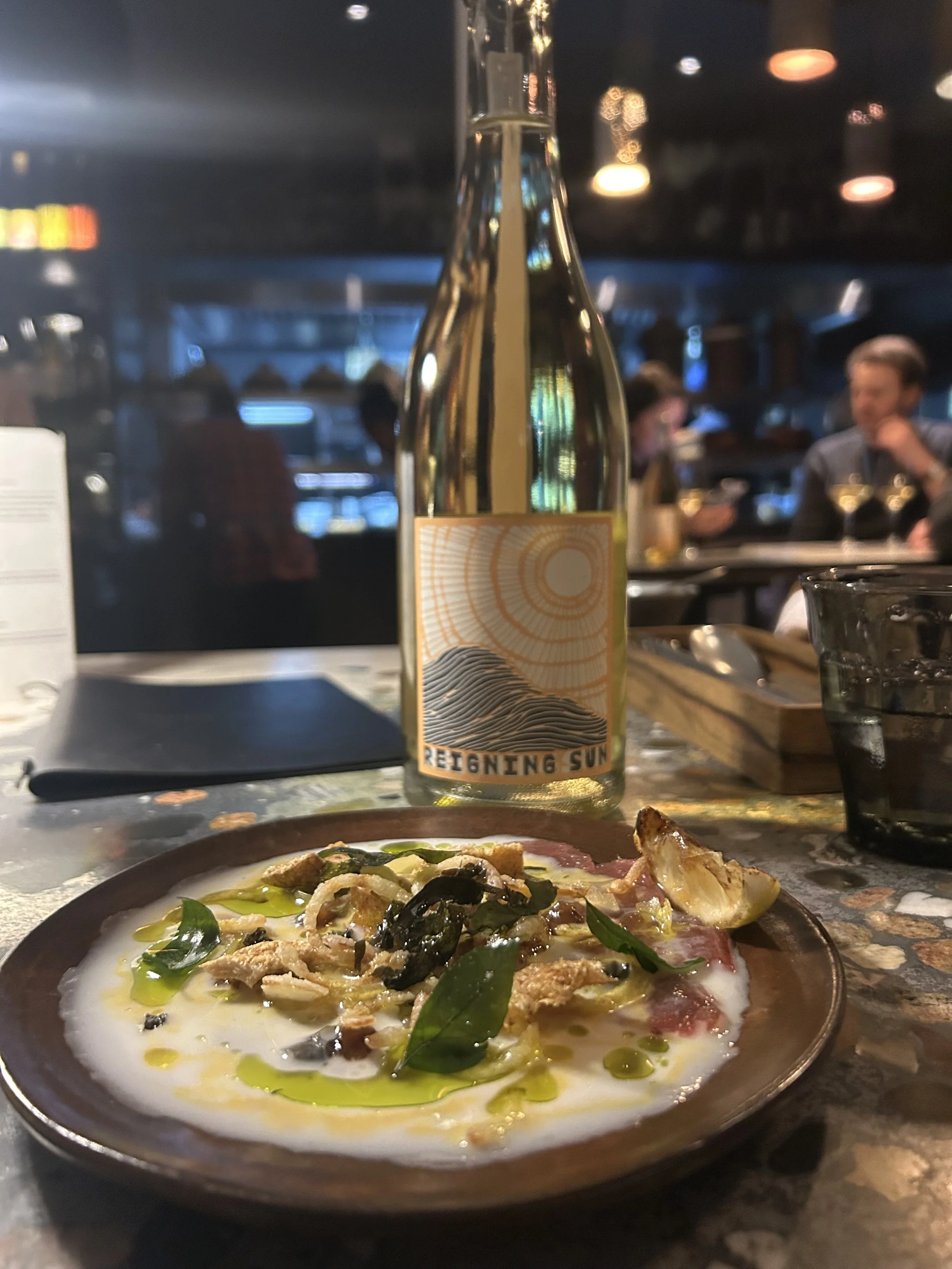
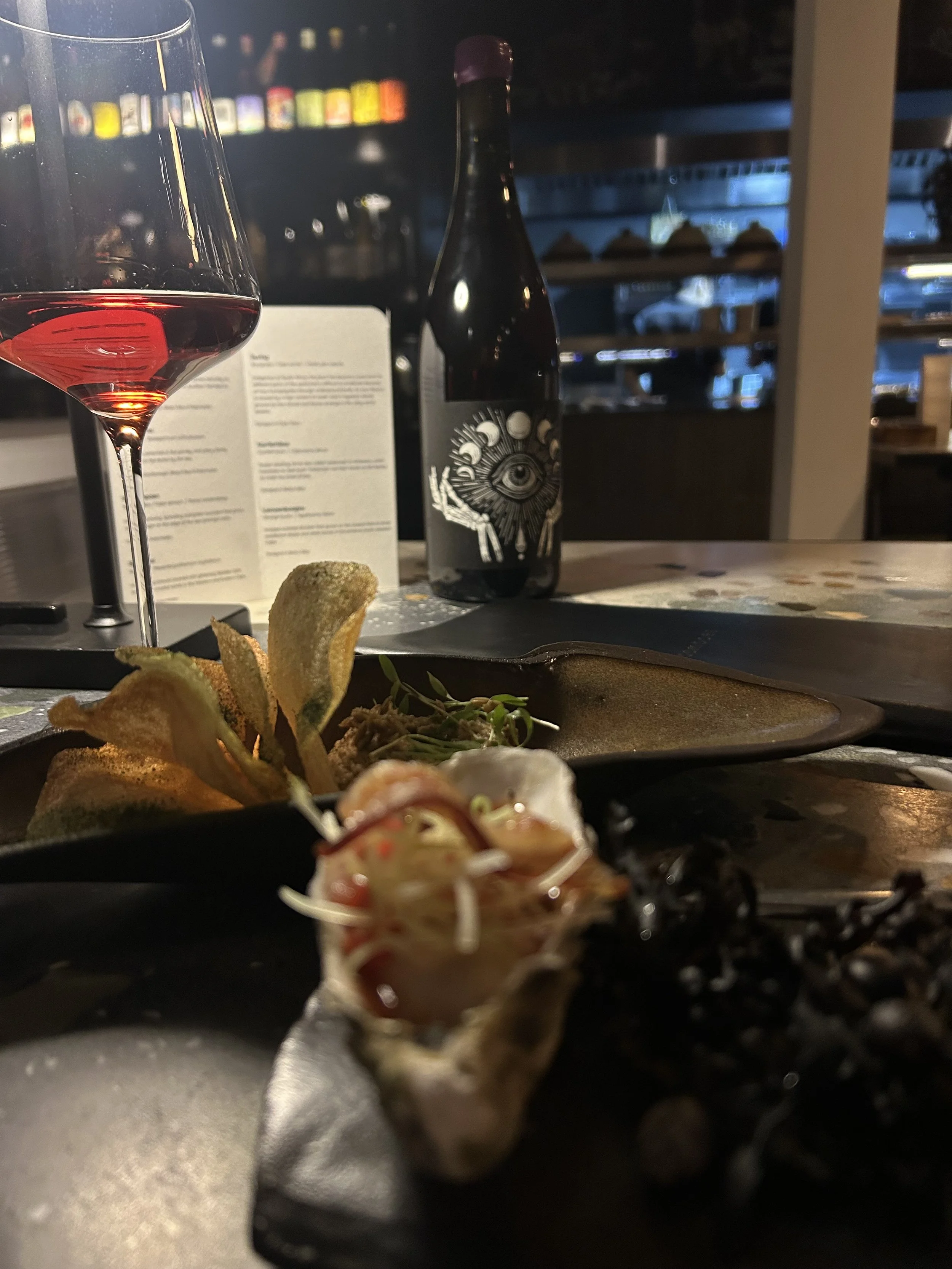
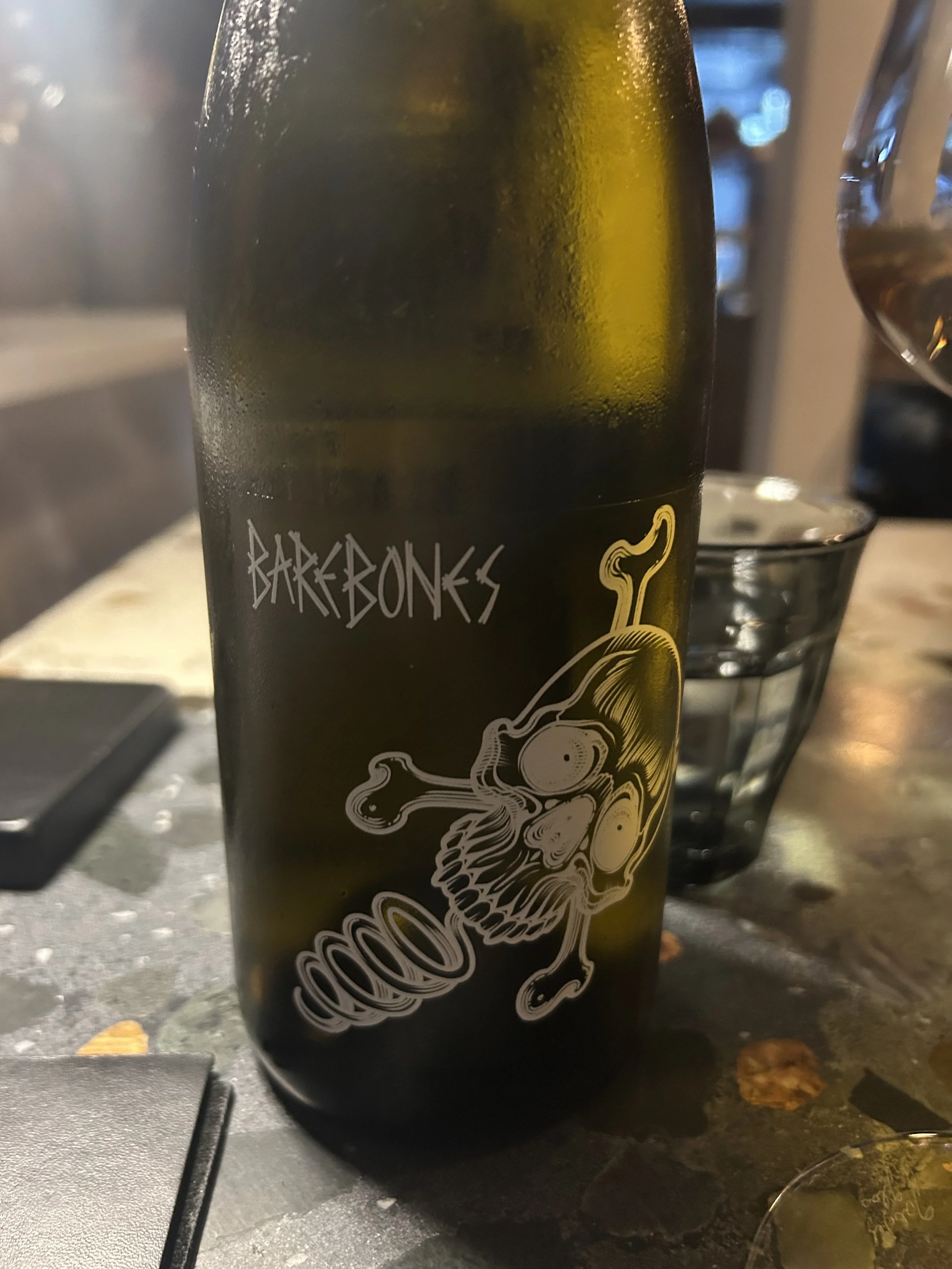
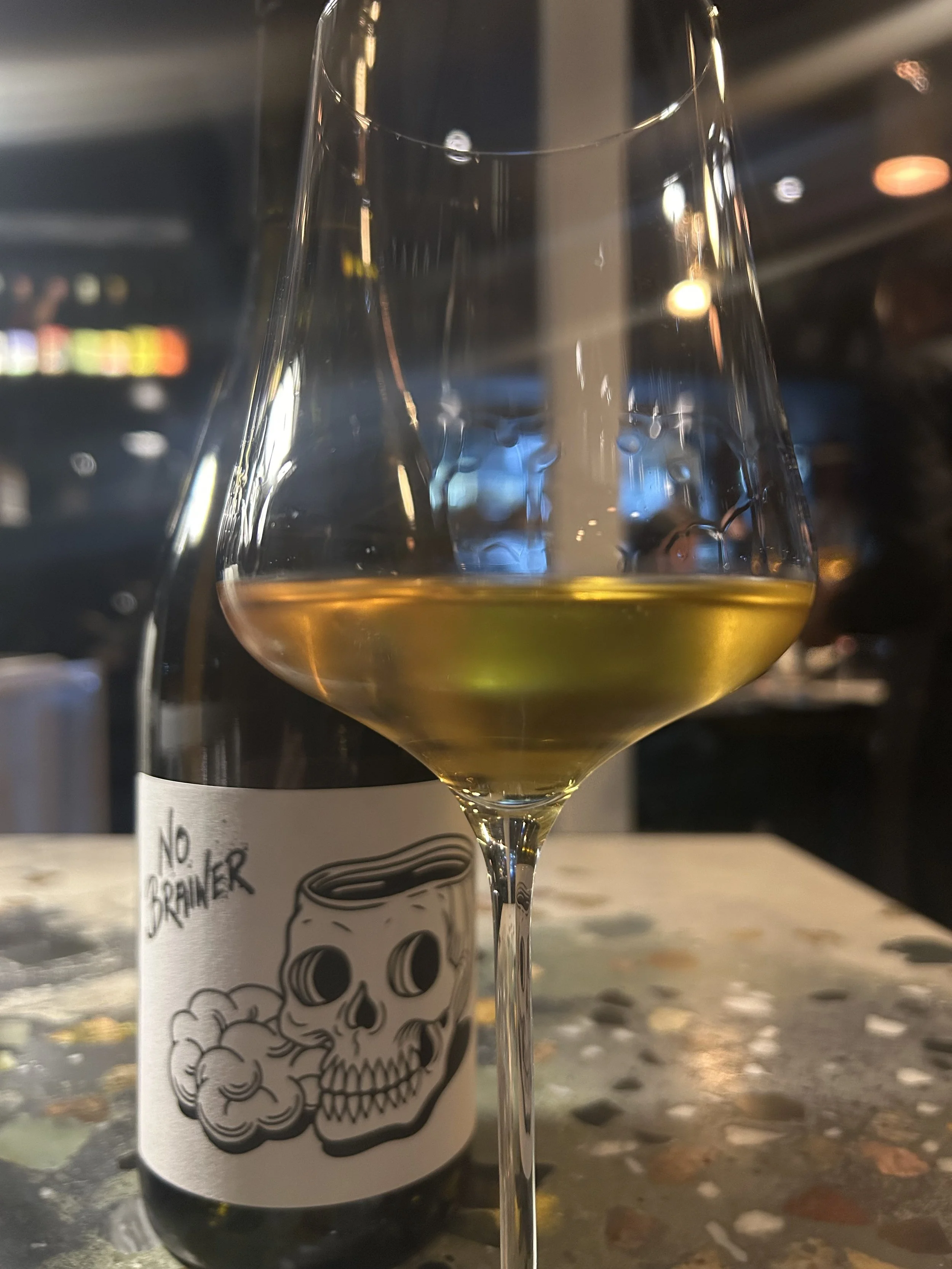
My favorite sip that night was a blend of white and red grapes. Aged with their skin on to create something truly special in the glass. For a skin-contact (orange) wine lover this was an outstanding and unexpected treat. If the option had existed, I would have bought a case on the spot. It was refreshing, crisp and just totally different and delicious. I worry I may never taste something like it again.
My favorite story from The Blacksmith tasting was The Flash Series. When Tremayne stood before our yuppie little cohort, all of whom had assembled in this quiet, cozy restaurant for an experience in taste, he presented as a man who loved wine and tattoos.
His wine labels, as it turned out, were designed by his tattoo artist. The Flash Series wine he brought to share with us had been inspired by the one-of-one, pre-drawn collection of tattoos known in tattoo parlors around the world as a flash series. This wine was a small-batch edition that celebrated the spirit of one-off experimentation.
Now that was a way to tell a story, I thought. I wasn’t sure what I wanted to do more inside that moment, drink the rest of what was in front of me or go get my first tattoo!
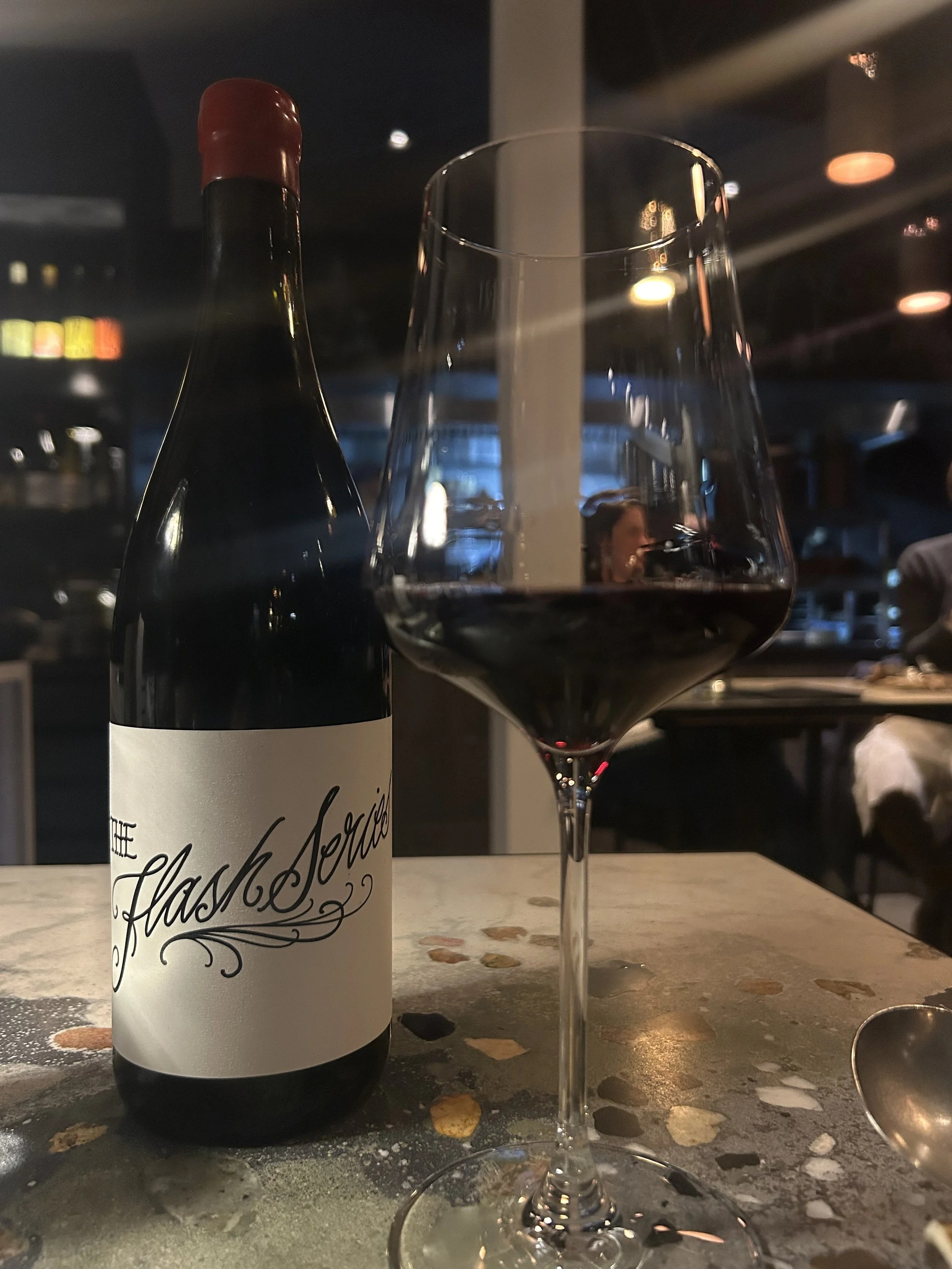
The Blacksmith Wines’ Flash Series at the Seebamboes Collaboration Tasting Dinner
The Blacksmith Wines call Swartland home. Swartland is a hot, rugged and dry region known in South African winemaking for its old bush vines and low-intervention approach. It is a region fiercely committed to producing natural wine that reflects the unique characteristics of an atypical, ornery terroir. It is a collaboration between likeminded creators and the land.
While that human factor was no doubt on full display here, I sensed there was something more connective and romantic to the shaping of this story. That’s when I stumbled into a Roman principle called Genius Loci.
When I first read about Genius Loci, I felt every fiber of my being tingle. I knew what it meant immediately. Genius Loci was my missing lens. For years, since I’d been of age, I had felt an indescribable pull to the world of wine. By reflecting on that here, it seems, I had found a way to process and connect the human factor with the craft and the terroir.
I could finally understand why every sip I took while traveling felt like it had the power to transform and transport me. Genius Loci is a Latin phrase that captures the influence of the spirit of the land in making wine. It is the soul of the land as only brought to life by human and land engaging in the ultimate collaboration and ceremony of purpose. It is the creative energy coming out of a certain place mined by human touch, ingenuity and vision. It is heartbeat and mindset, Mother Nature and man, art and science. It is past, present and future.
This was why I loved wine. This entangled, fateful relationship.
This is why I loved travel and writing. This entangled, revealing marriage.
I had the language now. A filter from which to process how I felt about this passion that always felt so, so much more than just a hobby. Here was proof that when we manifest what we love through action and collaboration, when we bend to partnership and humbly seek a counterpart, we shape a place, a story, a taste that moves, uplifts and travels.
We create meaning and beauty, most important of all, in the space just between.
We light up the sky.
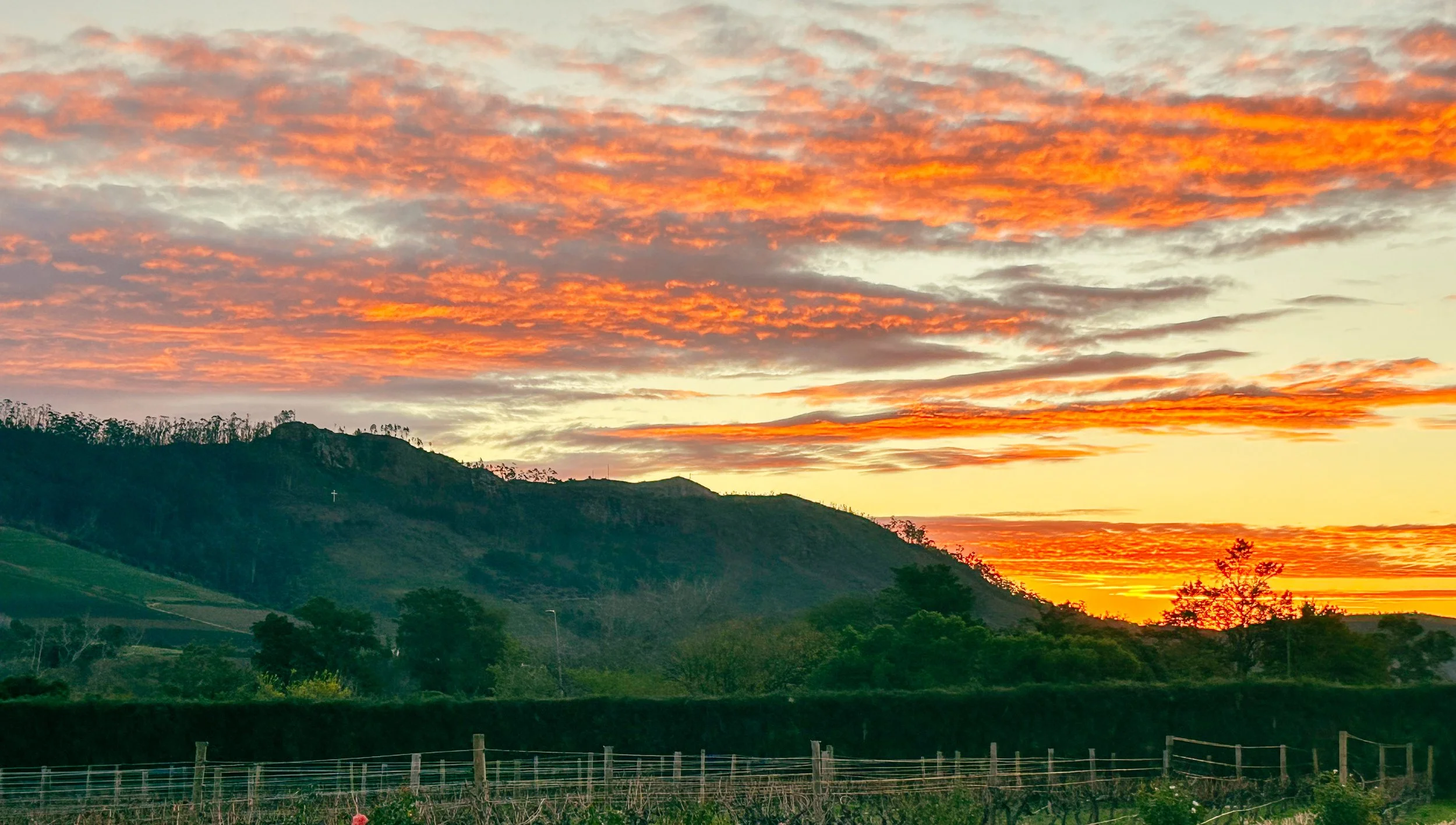
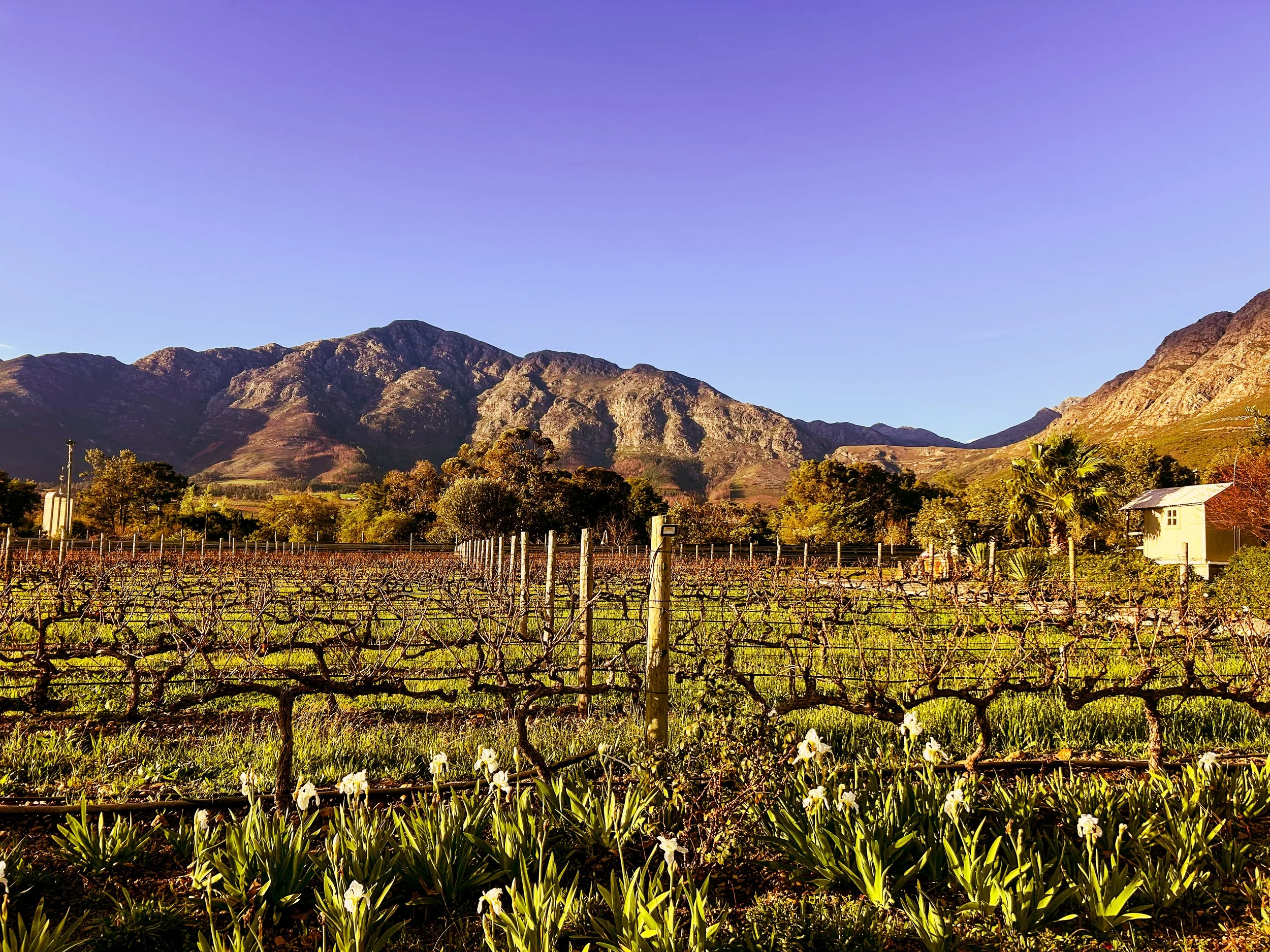
A fiery sunset over South Africa’s vineyards
