A Citizen of the World
Some journeys ask us to unsee
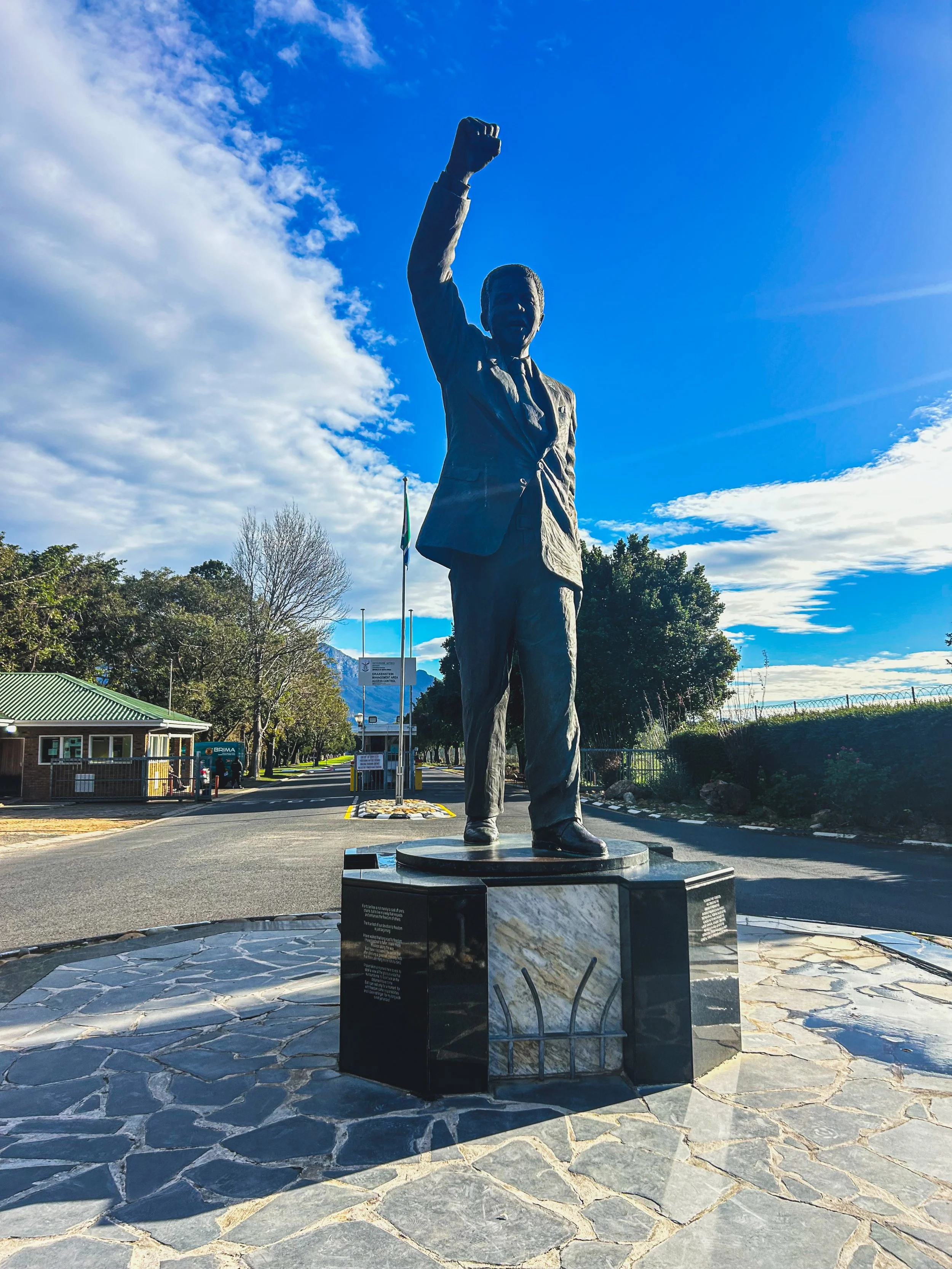
The Nelson Mandela statue out front of the prison facility where he took his long walk to freedom.
There was always a chance with the unpredictable winter weather that the ferry to Robben Island from Cape Town Harbor could get cancelled. While I understood that in theory, in practice, when it did, I still couldn’t help but feel caught off guard and disappointed.
I had just landed in Cape Town when the cancellation email popped up on my iPhone. It wasn’t the “I’m not even off the plane yet and my plans have already changed” message and timing that bothered me. It was the unshakable conviction that Robben Island was the right and only place through which to begin any journey into South Africa.
I had intentionally booked the first morning tour out to Robben Island on the first day of my long-awaited trip to Cape Town. I had wanted to see this place first, to pay witness to all that had transpired here, to acknowledge what it had stood for then and what it stands for now.
I had wanted to catch the view back to the rest of the world as he, Nelson Mandela, had seen it. I had wanted to see the inner courtyard where he kept his garden, hid part of his contraband manuscript, and played tennis on a make-shift court.
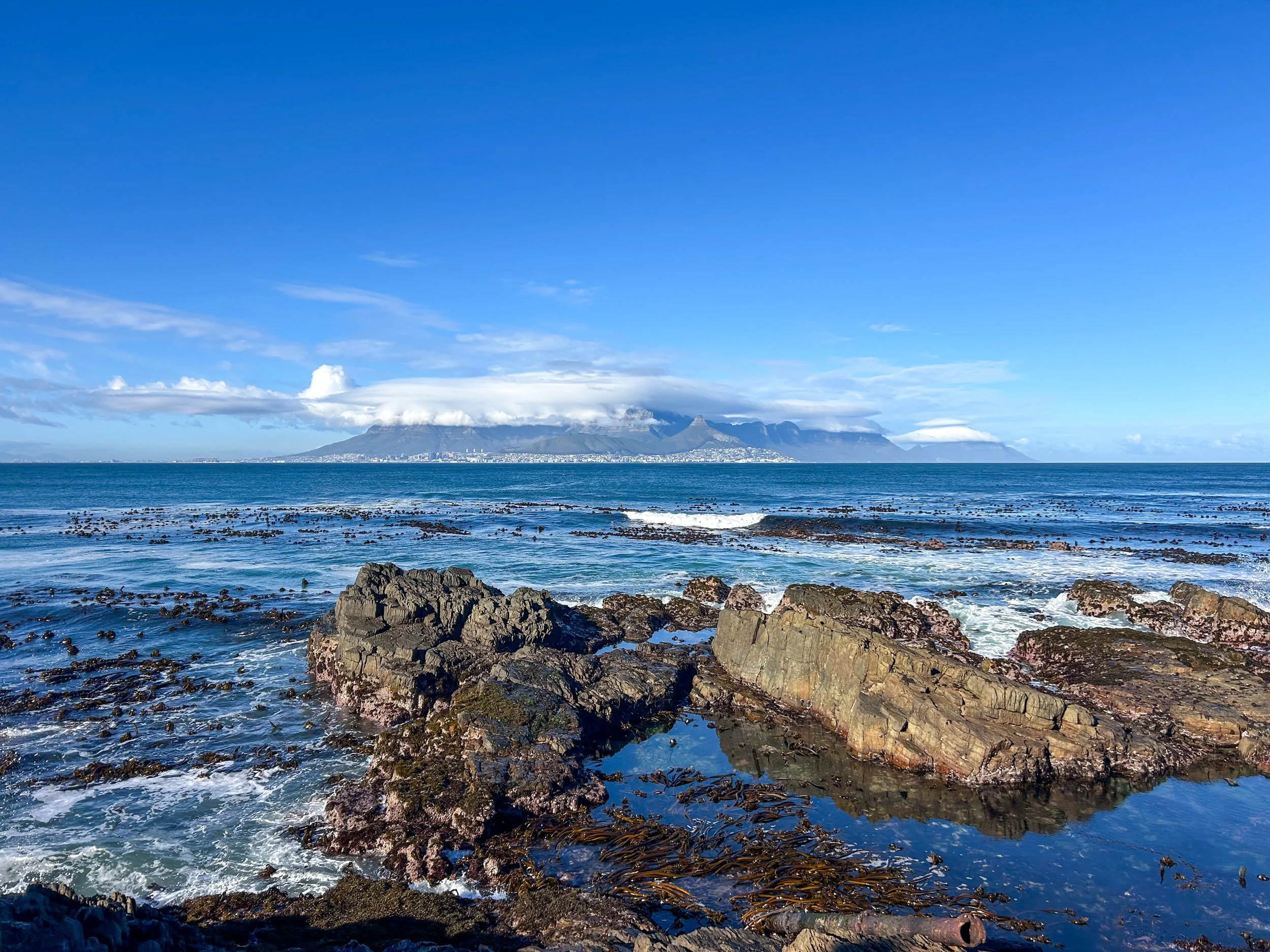
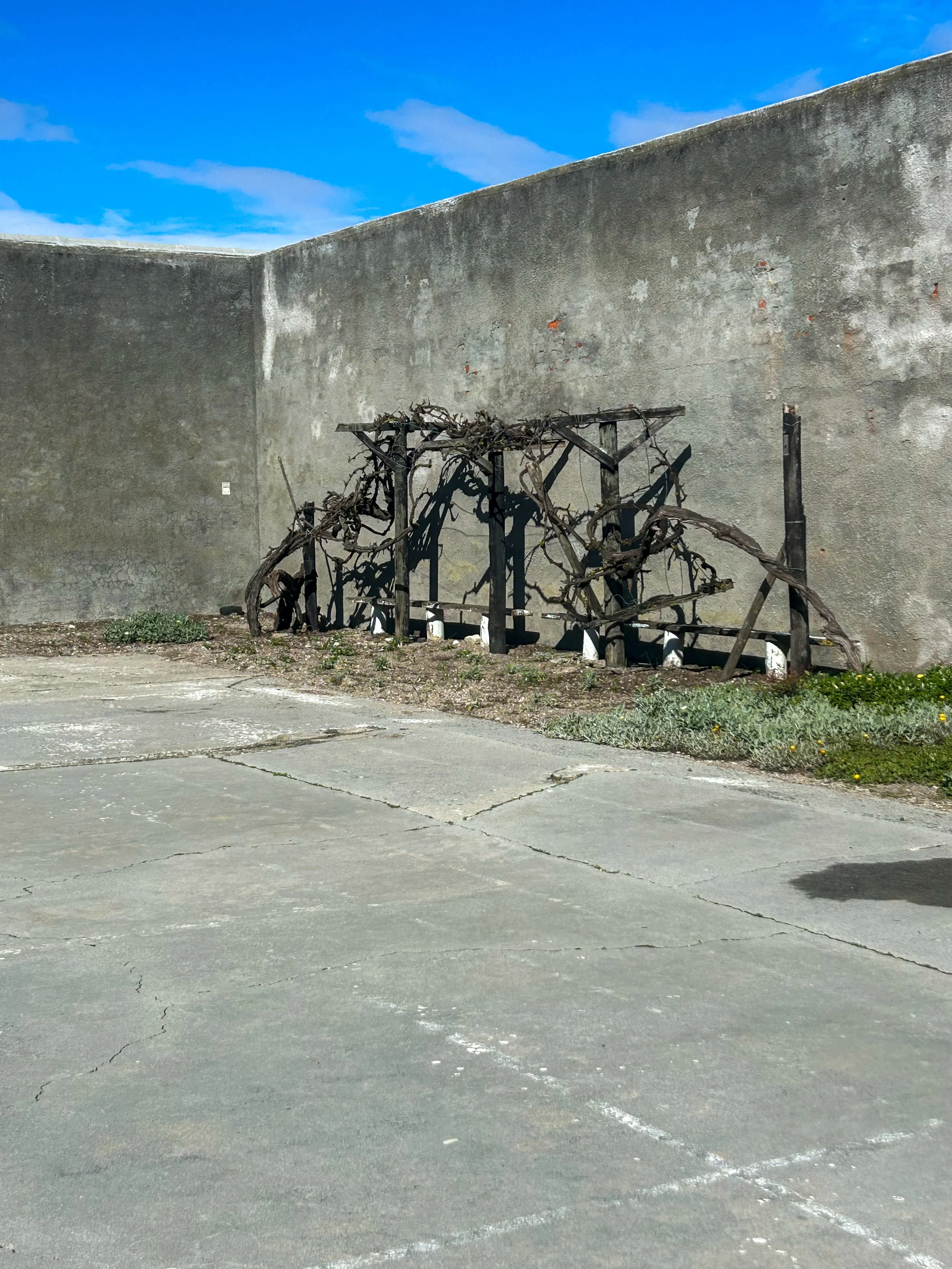
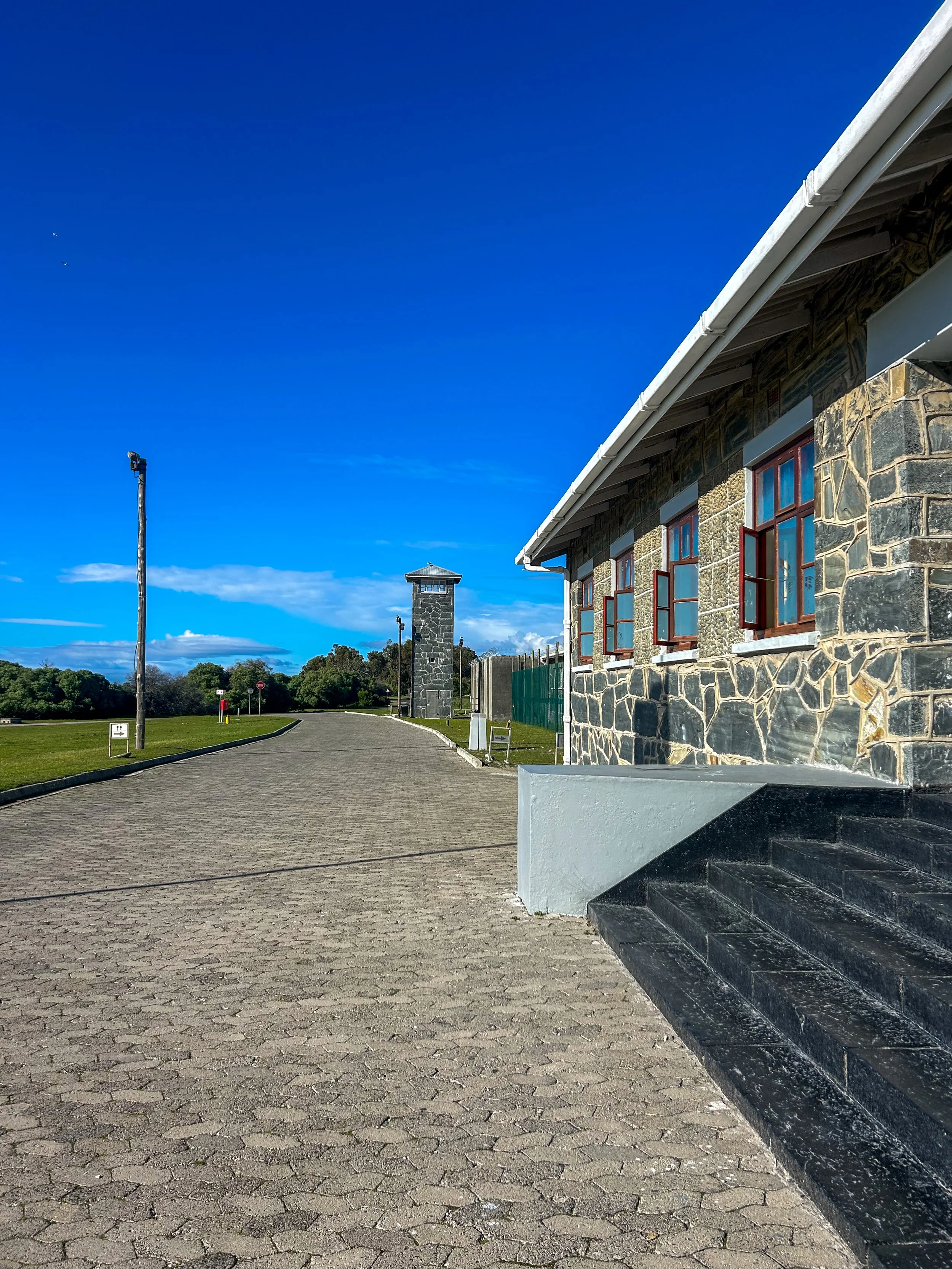
I didn’t think it was right to take in all the spoils of Mandela’s country without first taking in all the pain and injustice that this relatively speaking tiny plot of land bore and had now come to represent.
The whole of Robben Island occupies just two square miles situated four miles off the coast of Cape Town. It is but a minuscule crumb compared to the 471,000 square miles that make up Africa’s most southern country. And yet, it holds a disproportionate share of South Africa’s history of xenophobia and racism.
Robben Island has a dark past. Given both its proximity to the mainland and its distance from it, the island has long accommodated man’s penchant for fear and hate.
The island came under Dutch control during their campaign to colonize what is now South Africa in the seventeenth century. During this time, Robben Island was ripped out from under the indigenous peoples who used it for fishing and hunting. Over the centuries, the Dutch, and eventually the British used the island as a prison and mode of banishment.
When South Africa’s Apartheid government gained power, Robben Island went from a relatively unknown isle of incarceration to one of the most infamous prisons in the world. It is notorious for, among other injustices, being the prison that stole 18 of 27 years of Nelson Mandela’s freedom.
Twenty-seven years.
I had finished Mandela’s autobiography, The Long Walk to Freedom, weeks before arriving in Cape Town. While reading the text, I was appalled to learn of all the hate and ignorance that rained down on Mandela and all non-whites during this time.
I was also deeply unsettled and humbled to have to admit that I didn’t know that much about Nelson Mandela, the man, beyond the headlines that announced his release in the supermarket tabloids. I came to learn his story was an epic one of resilience, faith and vision that I had only, but thankfully, encountered because of my travels.
His story has forever changed how I think about calling and purpose. How I think about the human obligation I have to arrive in a place armed with more than a deliciously ambitious itinerary.
Festering behind Mandela’s inspiring triumph over evil and inequality has always been the ruinous plot of Apartheid. Inspired on one hand to be reading about an incredible man’s incredible legacy, I was mortified on the other, to only now be discovering at forty-seven years old, how extreme and vicious Apartheid had truly been.
I was further horrified to discover that a white-only parliament had pushed an Apartheid candidate into office just three years after Nazi Germany’s surrender put an end to the atrocities of World War II. As if that wasn’t disconcerting enough, I bristled at the enormity and perhaps familiarity of history’s footnote. Prime Minister Malan wasn’t elected by the majority of South Africans. He rose to power behind the support of an electorate.
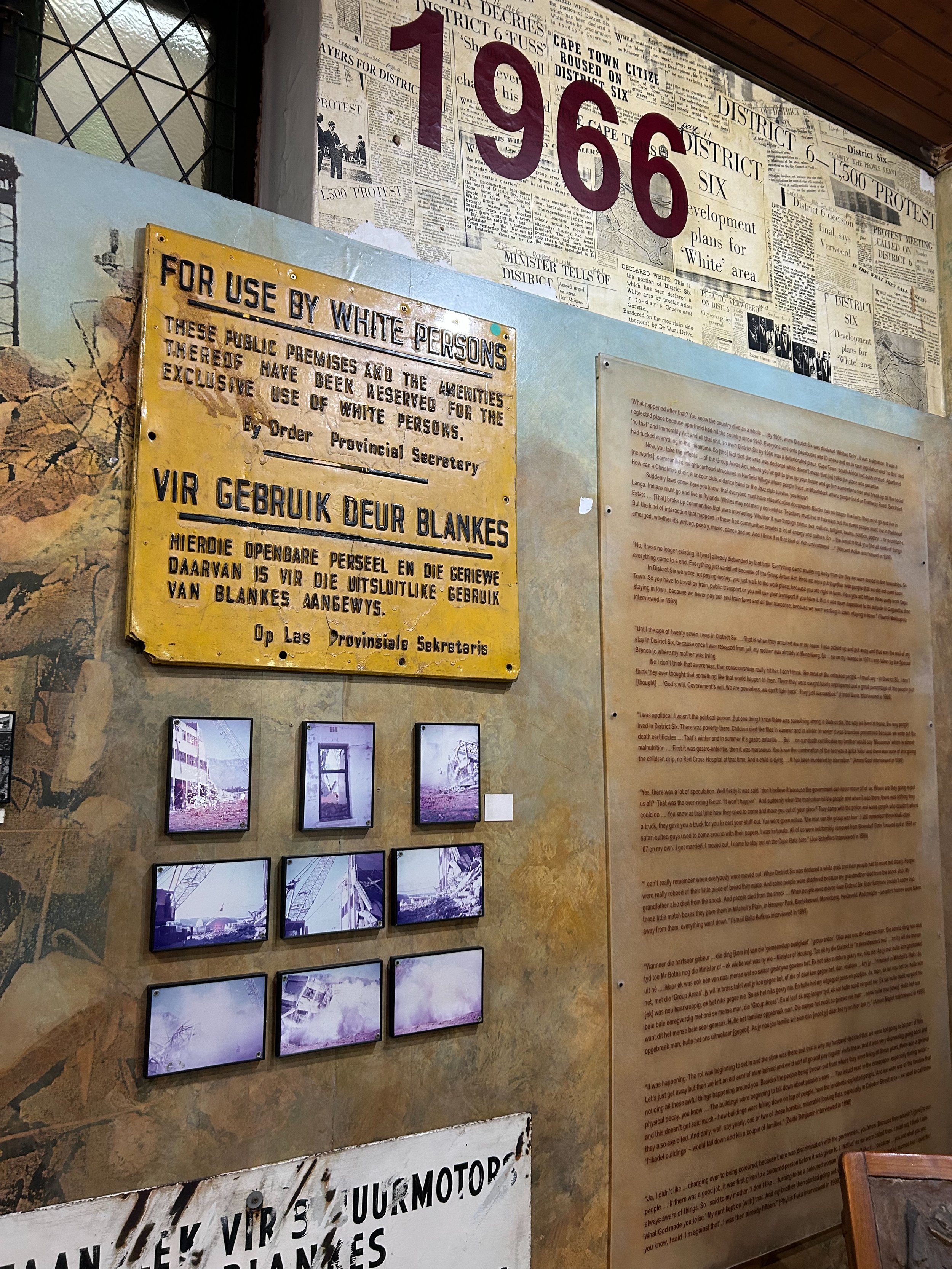
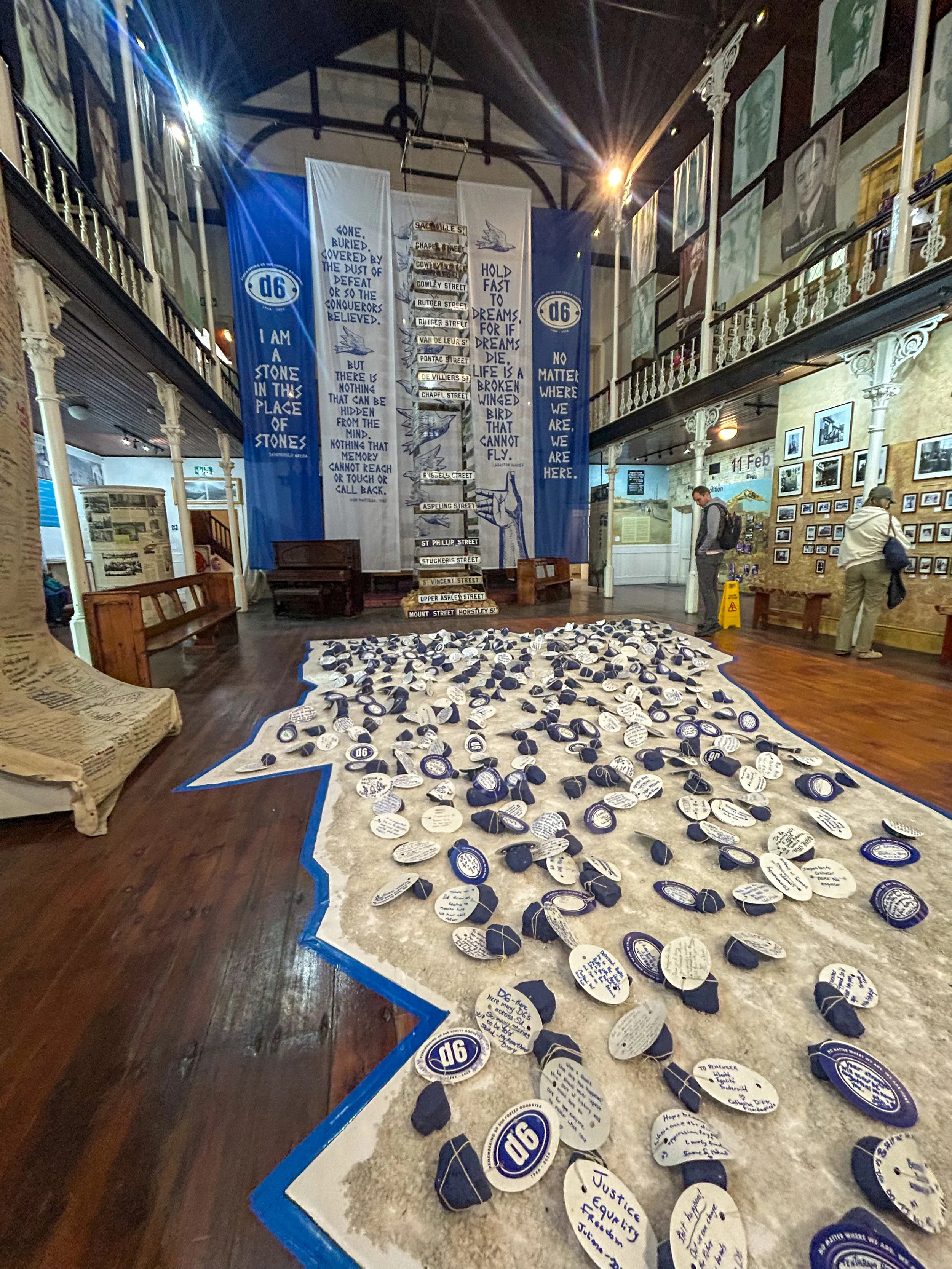
Suddenly, I grew very anxious and self-aware that I didn’t know much, or enough, about most of the injustices in the world, past and present.
Inside that shame, even before setting foot in South Africa, I was starting to grasp, though, that ignorance, even passive ignorance, was no case for immunity.
How could I call myself a citizen of this world, move about it and partake in it freely, and not let the scars of its pain sear and stir me?
I’ve said before that travel is so much more than escape and consumption. I’ve preached, too, that travel can be transformational, opening our eyes, minds and hearts where and when we allow it to.
But travel here in this haunted, breathtaking and complicated place had to be about something bigger than just reappraisal of self. There was too much at stake. I am certain it had to be instead about answering an incessant wake-up call. Its message was clear.
See.
See the pain, the poverty and the division. But also see all the people. All the colors. The entire Rainbow Nation.
But then, unsee.
Not unsee cultural or tribal identity, but unsee superficial and trivial difference where shared humanity could be so much more powerful and productive, healing and unifying. And don’t just correct my vision in South Africa. Bring that clarity home to my own hurting, broken country and to others aching around the world.
My country has its own shameful past and present with xenophobia and racism. We are still painfully negotiating our great awakening. But there’s one idea I can’t unthink. The opposite of awake is unconsciousness. If my travels taught me one thing, it’s that we can’t afford to close our eyes.
And I didn’t have to imagine what doing that looked and felt like either. What it led to. I had seen that all around me here.
As much as I later came to adore the Western Cape, it was not an easy place to move and be. Despite the fact that I called Chicago home and this was the 33rd country I had visited solo, I questioned if I had been too careless in coming here alone. As a self-led female traveler, Cape Town too often made me feel unsafe and vulnerable.
But I suspect my inability to relax into it was less about safety and more about culture shock. And I hesitate to even use that term here to describe what I mean.
I hated the mountain of evidence that Apartheid, inequality and white supremacy had left behind some 32 years later.
Shanty towns millions of people thick spread out for miles just outside this cosmopolitan city often named one of the most beautiful in the world.
Homeless people camped out in front of big homes hiding behind big walls, capped for effect, or necessity, with ugly tangles of barbed wire.
Airbnbs souped up with advanced camera security systems designed to capture every angle on a property’s front gate.
Verbal warnings from waiters, bartenders and shopkeepers to never, no seriously, never walk in the dark, anywhere, especially alone.
Even if it got dark as it did in the winter at 6:00pm.
Even if I was staying just a few blocks down the street.
Even if it was 7:00am and the sun just hadn’t come up yet and I wanted a cup of coffee.
I accepted this confinement as penance. Penance for seeing and feeling here what I hadn’t spent enough time seeing and feeling anywhere else, especially at home. On the ferry ride back to the harbor from my rescheduled tour of Robben Island, I thought about America’s own sins, the battles for equality we were still fighting as Mandela fought from that cold, concrete cell. I thought about our treatment of indigenous peoples. I thought about slavery and segregation.
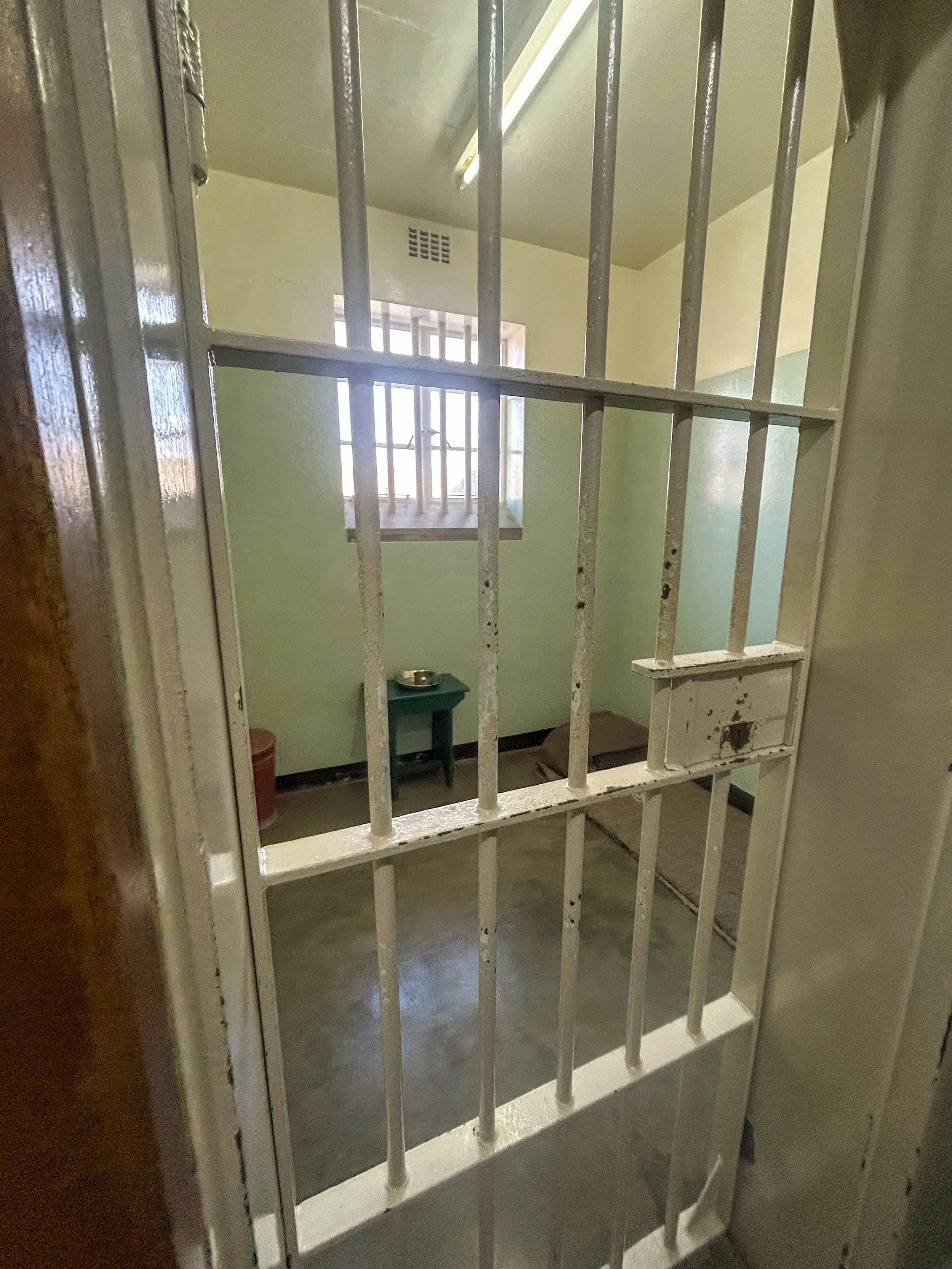
Nelson Mandela’s cell on Robben Island. Note the “bed.” It was nothing but a thin mat
But what about me? What had I done? What should I be doing?
On the way home from the gym, there’s an overpass I walk under almost every day. It’s a homeless village that sits less than a mile from my house, just a few blocks from some of the city’s best restaurants and million-dollar condos.
What was I doing? I was crossing the street to avoid the guilt, not the threat. I was holding my breath, quickening my gait, looking straight ahead.
What should I be doing? If I want one day to become a full-blown citizen of the world, I know I have to do more than just stay awake. I have to escape from my own isle of privileged and ignorant incarceration.